
Caravaggio (Michelangelo Merisi), Martirio di sant'Orsola, 1610, Archivio Patrimonio Artistico Intesa Sanpaolo / foto Claudio Giusti
The return of Caravaggio's “Martyrdom of Saint Ursula” and new installation
Gallerie d'Italia - Napoli
From the 1st of August 2025
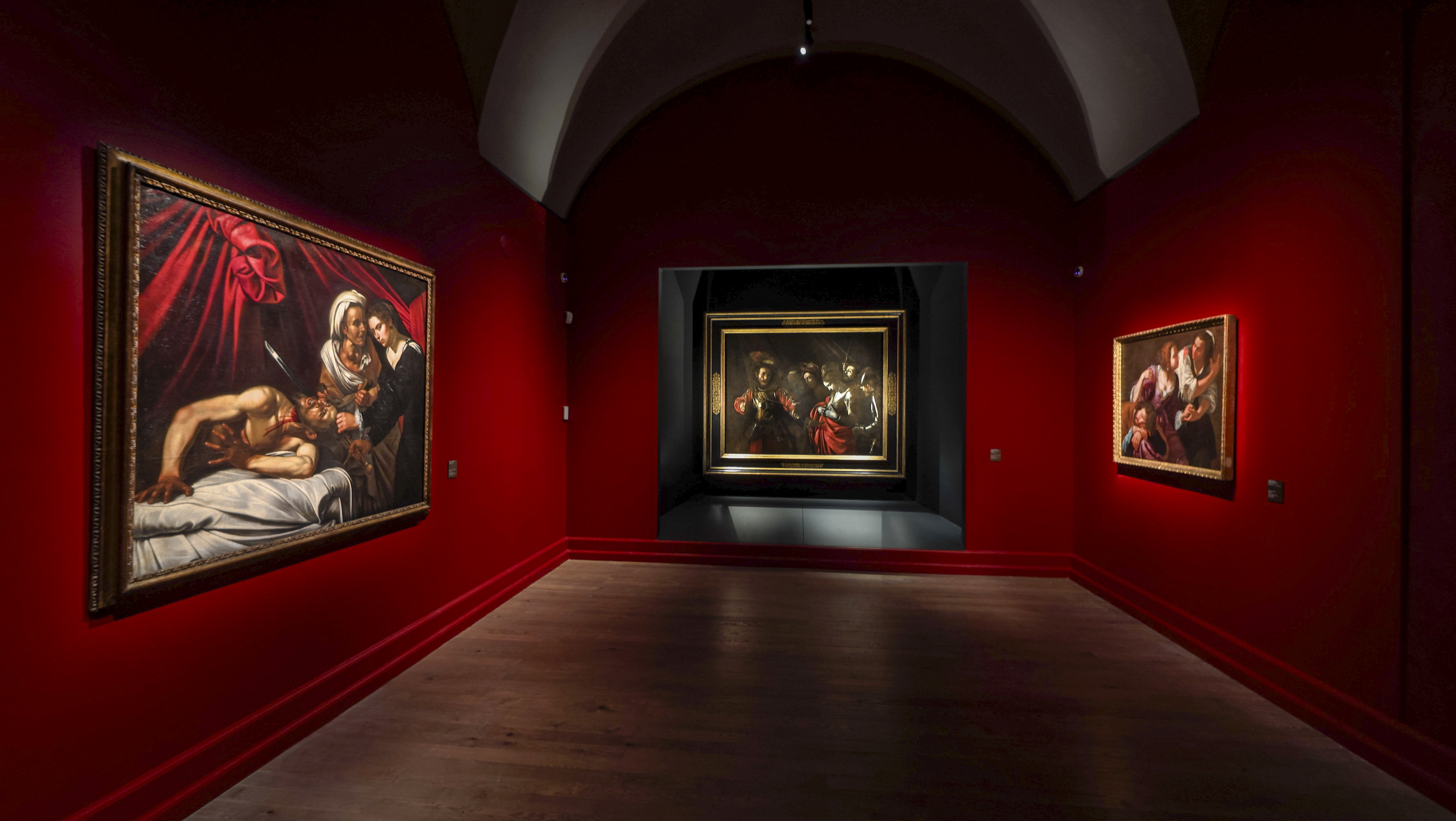
Having returned to Naples after being loaned to the Gallerie Nazionali Barberini Corsini in Rome for the exhibition "Caravaggio 2025", the Martyrdom of St. Ursula, Caravaggio's last masterpiece, is being presented to the public in a completely new guise. The Gallerie d'Italia in Naples presents the new layout of the room that is home to the precious canvas, resulting from a meticulous operation to upgrade the museographic and lighting design, offering visitors a deeply moving experience.
The optimisation of the work is inextricably linked to its conservation.
The painting has undergone a thorough cleaning process, carried out by restorers Laura Cibrario and Fabiola Jatta in the workshop at the Gallerie d'Italia in Naples. This has revived the brilliance and definition of Caravaggio's work, bringing to light three figures that had disappeared over the years. A special frame - known as a clima frame - has been installed to protect the masterpiece. This is a technologically advanced system that ensures constant monitoring and control of humidity and temperature, preserving the painting for future generations.
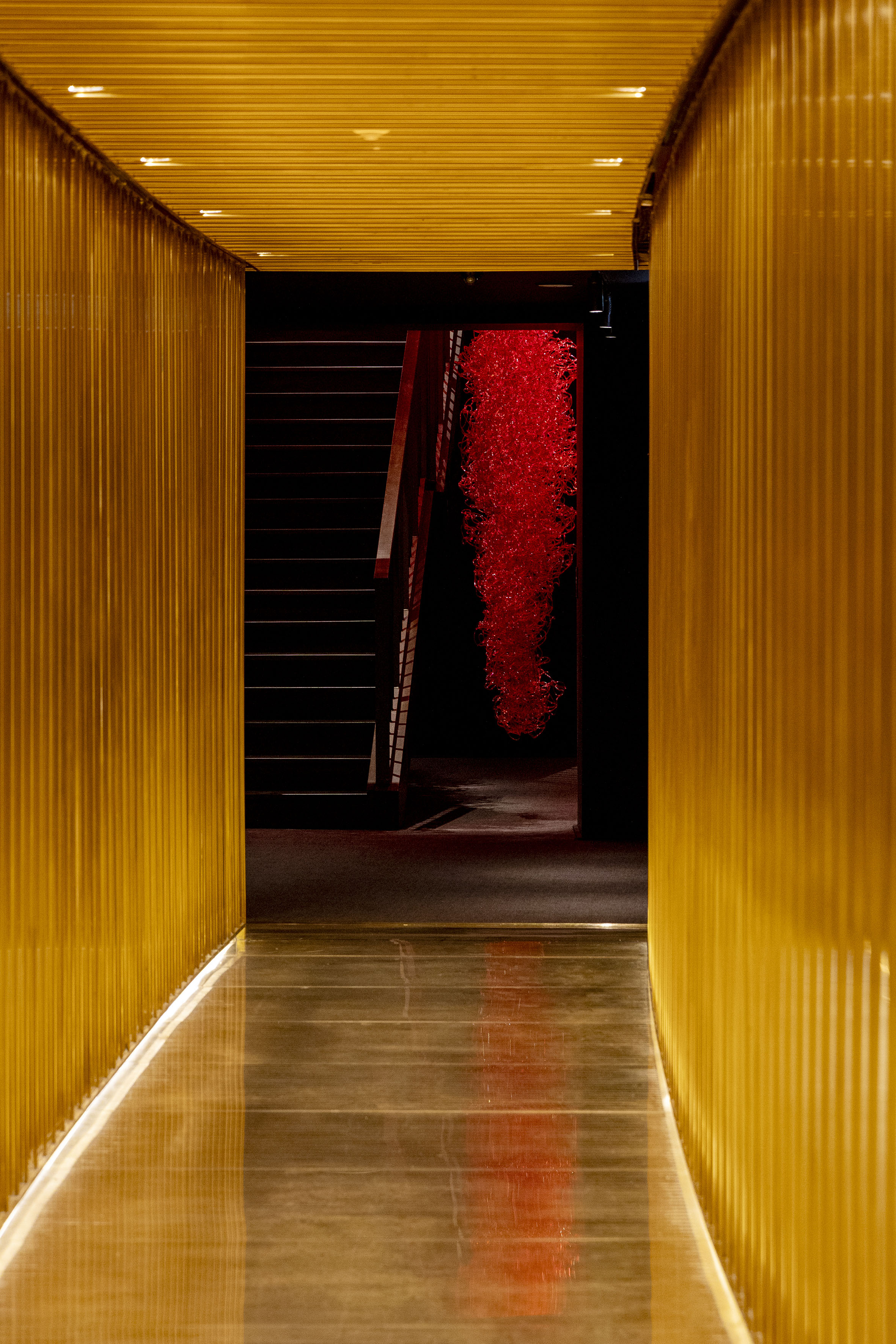
The return of Caravaggio's masterpiece The Martyrdom of St. Ursula to the Gallerie d'Italia in Naples is accompanied by a new visitor itinerary, optimising the space that precedes the room in which the painting is displayed.
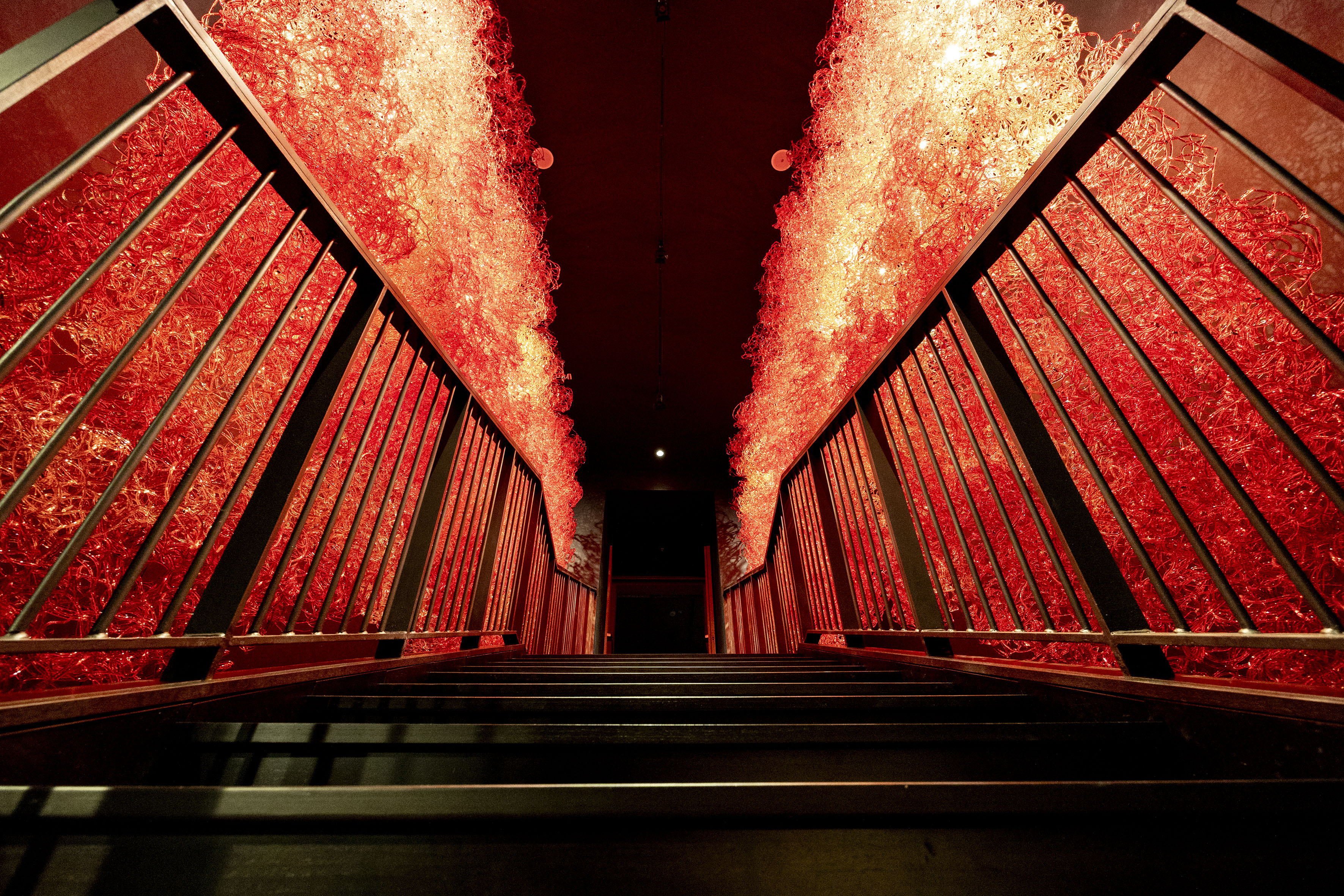
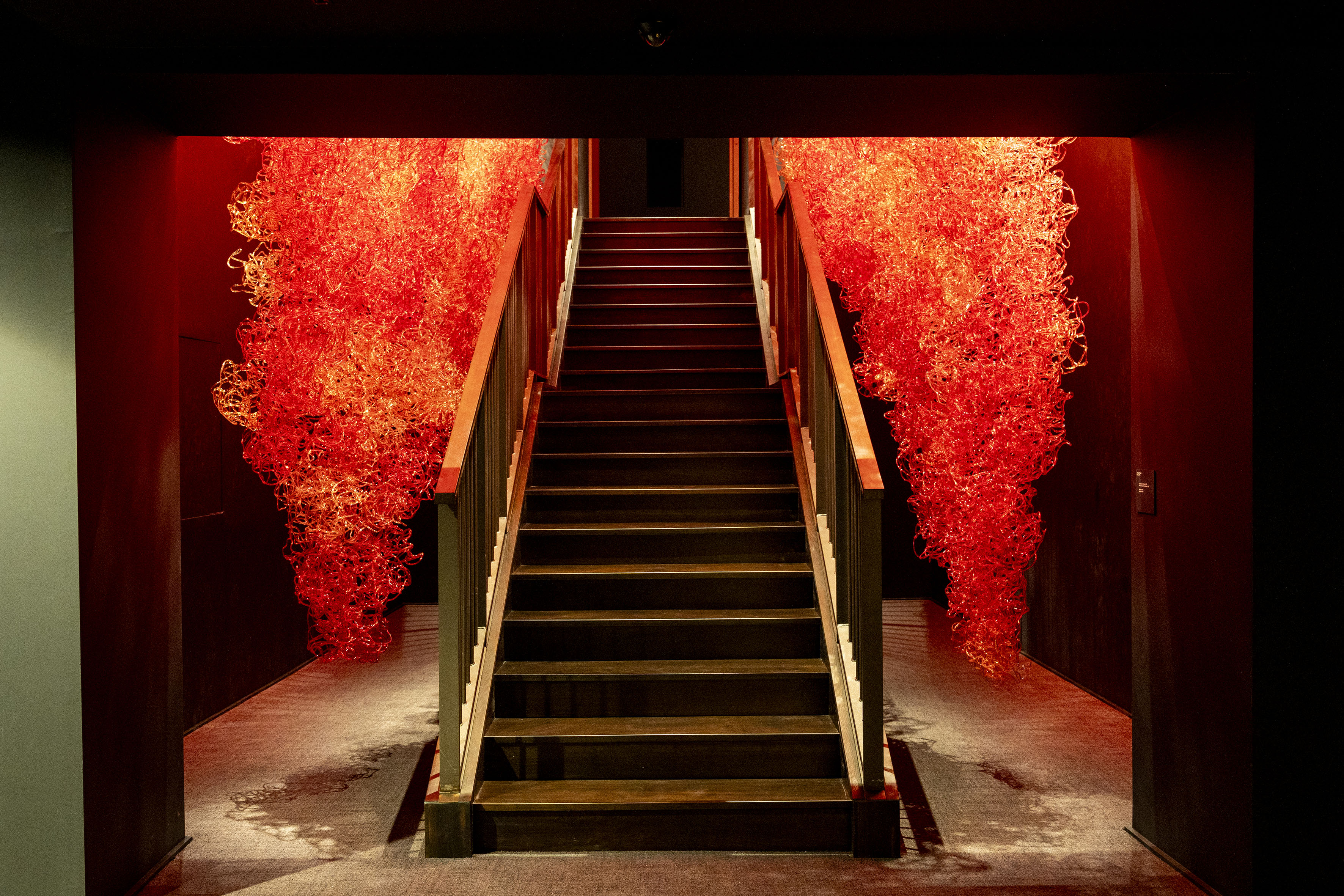
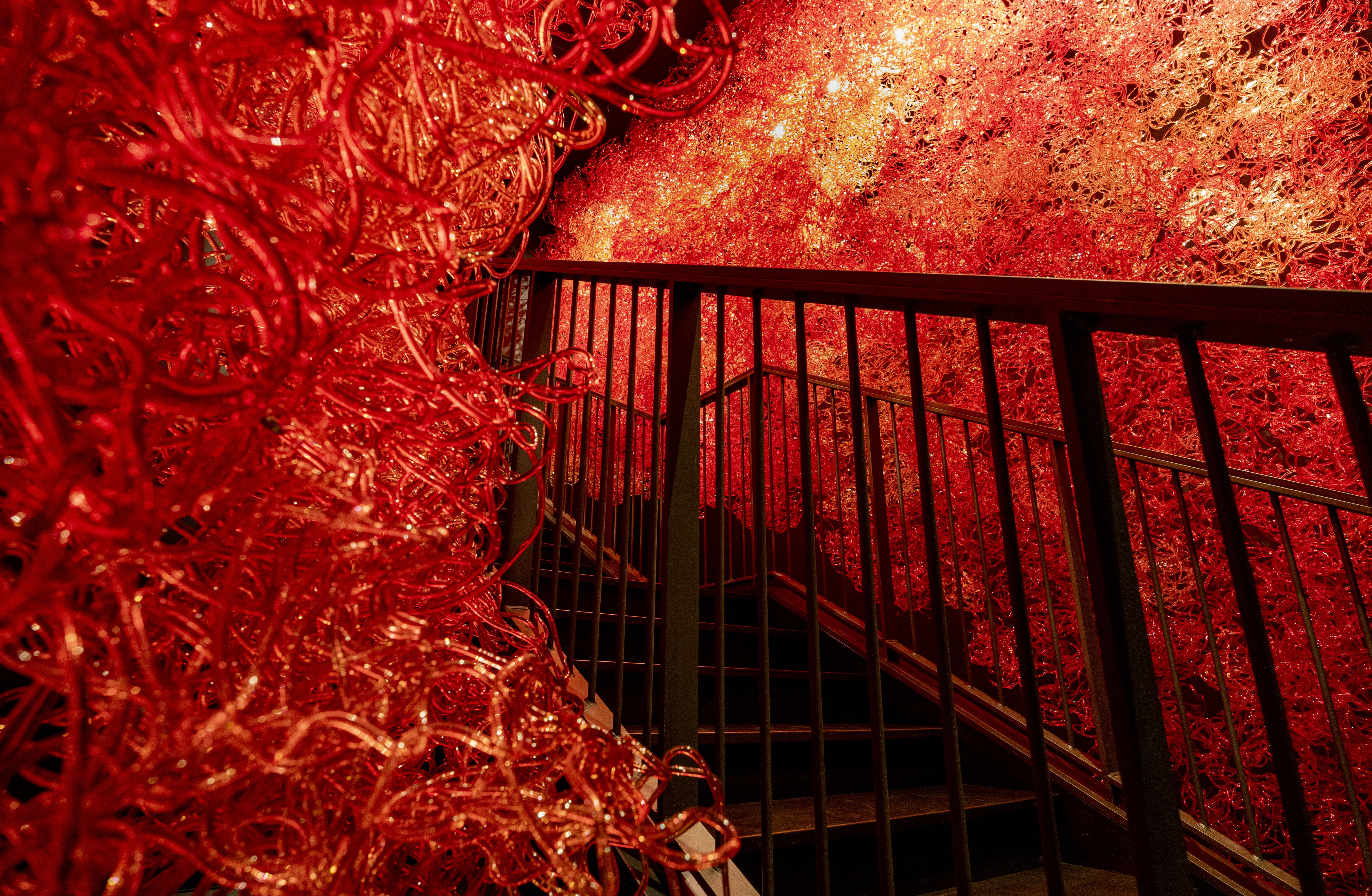
Visitors are accompanied to the first floor, where Caravaggio's famous painting is displayed, by Jacopo Foggini's site-specific installation “La Nuvola e l'ombra” (The Cloud and the Shadow). The aim is to create an immersive experience and to optimise the path that leads visitors towards the room that houses Merisi’s painting.
The idea is to wrap the staircase leading to the first floor in a “cloak of red clouds”, creating a small, suspended world that accompanies the visitor towards the Caravaggio Room.
The link between the two works is manifested in various ways: the colour red, presented in delicate and deeper shades, is by no means coincidental: it makes a veiled reference to the fabric wrapped around the martyr portrayed in the painting and illuminates the whole scene described by Caravaggio. Just like in a 3D freehand drawing, Foggini's installation emphasises the vertical development, accentuating the movement of the staircase. The stairs are bathed in sophisticated purple light generated by the polycarbonate, radiating from above, leading the visitor into an “other” space, preparing the mind and eye for the vision of the Martyrdom of Saint Ursula.

Ph. Salvatore Laporta
Ph. Salvatore Laporta
Ph. Salvatore Laporta
Ph. Salvatore Laporta
Ph. Salvatore Laporta
Ph. Salvatore Laporta